


STEP BY STEP PROCESS
Once the wheels have been dropped/collected, they are inspected inside and out for assessment of damage, condition with customer consultation on colour choice before any work is undertaken. The wheels are then ready for start of the process.

Tyres are removed and marked in accordance to rotation and profile, valves are removed alongside any wheel weights and centre caps (if any).


The wheels are then cleaned and dipped in a chemical solution to remove all previous coatings back to the bare aluminium and then rinsed off to clean.


The wheels are then placed into the oven to be “outgassed” which is a step where the bare wheels are heated to roughly 220 degrees for 30mins to remove any oil/grease/trapped air and contaminants in the pores of metal to alleviate this from happening in the final finish.

Once the wheels have been removed from the oven and left to cool, they are then individually prepped and repaired of curbing/damage and any corrosion sanded out.
(Some damage may be too deep to be sanded out, therefore it would need to be aluminium welded to build back up and then further sanding to be re-shaped to the wheel which can extend the turn around time)

Now the wheels have been repaired, we can now place them in the sandblast cabinet to undergo “blasting” the whole wheel inside and out to further clean and prep the wheel for coating. Media blasting the wheel leaves a uniform surface on the wheels and a 'key' for the powder coat to adhere to.
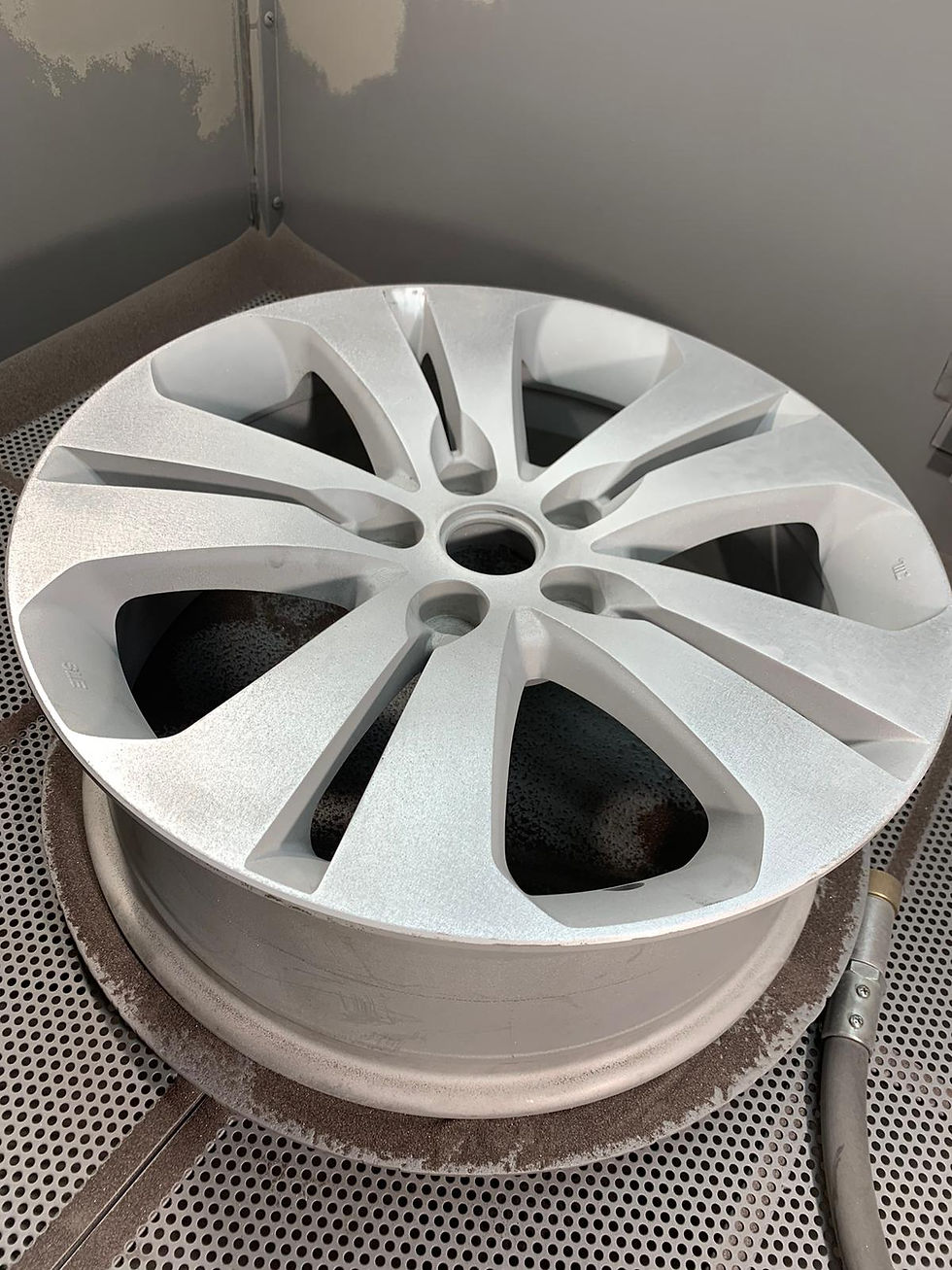

The wheels are now cleaned off using compressed air and masked ready to be powder coated in a single, two or three stage choice of colour! And then partially baked in the oven, cooled and then a clear coat is applied for a full bake to seal it all in!
(Some colours/finishes don’t require a clear coat but can be applied if requested for extra protection)
(In some cases where the condition of the wheel is deteriorated from deep pitting and corrosion, a high build primer will be used to aid the coverage of the damaged to try and achieve the best finish possible)


Once the wheels have been left and now cool to touch, new rubber valves are inserted and tyres are then re-fitted and inflated to desired pressure. Finally, balanced with new stick-on wheel weights ready to be fitted on the vehicle.


